目标
将弹性策略应用于目标,包括应用、组件和 actor
目标
命名策略应用于目标。Dapr 支持三种目标类型,这些类型适用于所有 Dapr 构建块 API:
appscomponentsactors
应用
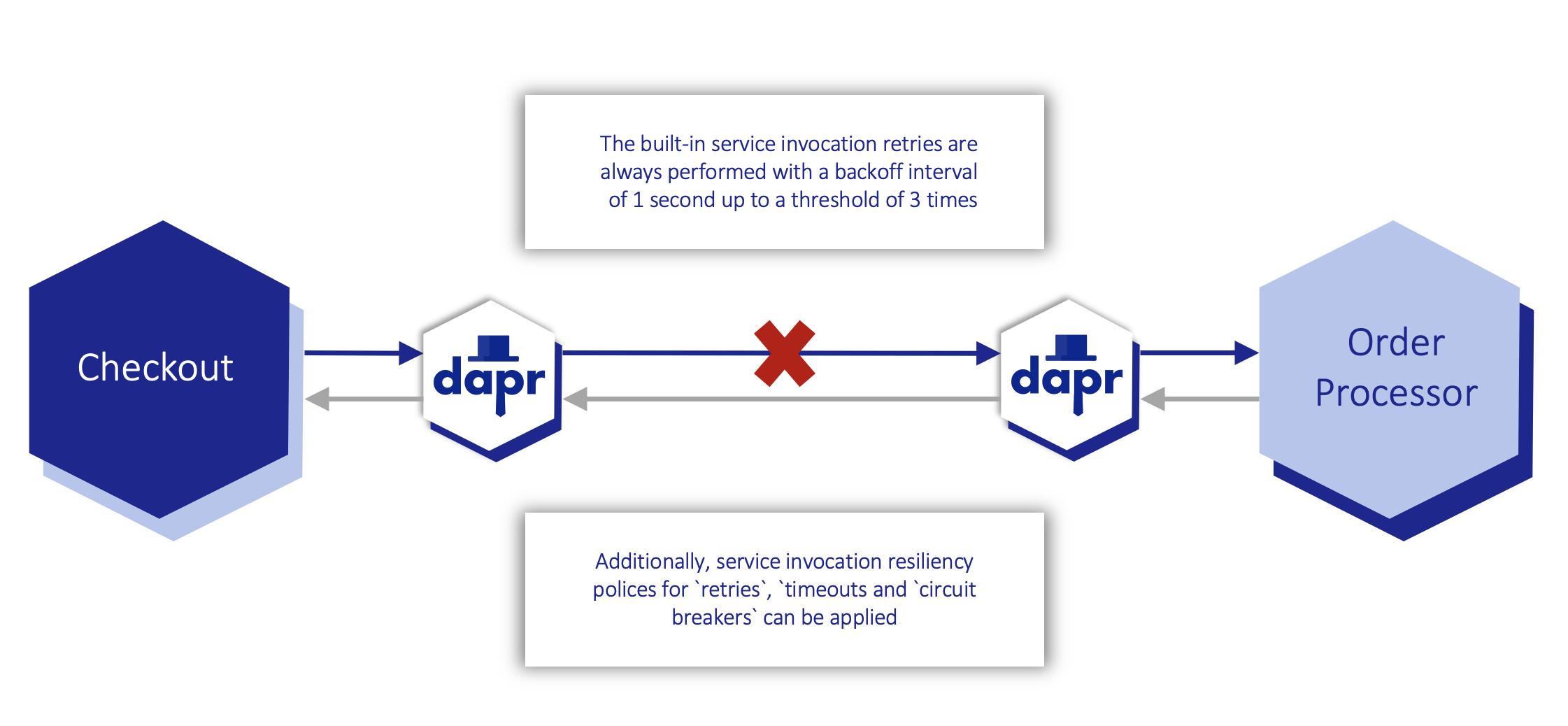
使用 apps 目标,您可以将 retry、timeout 和 circuitBreaker 策略应用于 Dapr 应用之间的服务调用。在 targets/apps 下,策略应用于每个目标服务的 app-id。当边车之间的通信发生故障时,会触发这些策略,如下图所示。
Dapr 提供了内置服务调用重试,因此任何应用的
retry策略都是额外的。
针对 app-id 为 “appB” 的目标应用应用策略的示例:
specs:
  targets:
    apps:
      appB: # 目标服务的 app-id
        timeout: general
        retry: general
        circuitBreaker: general
组件
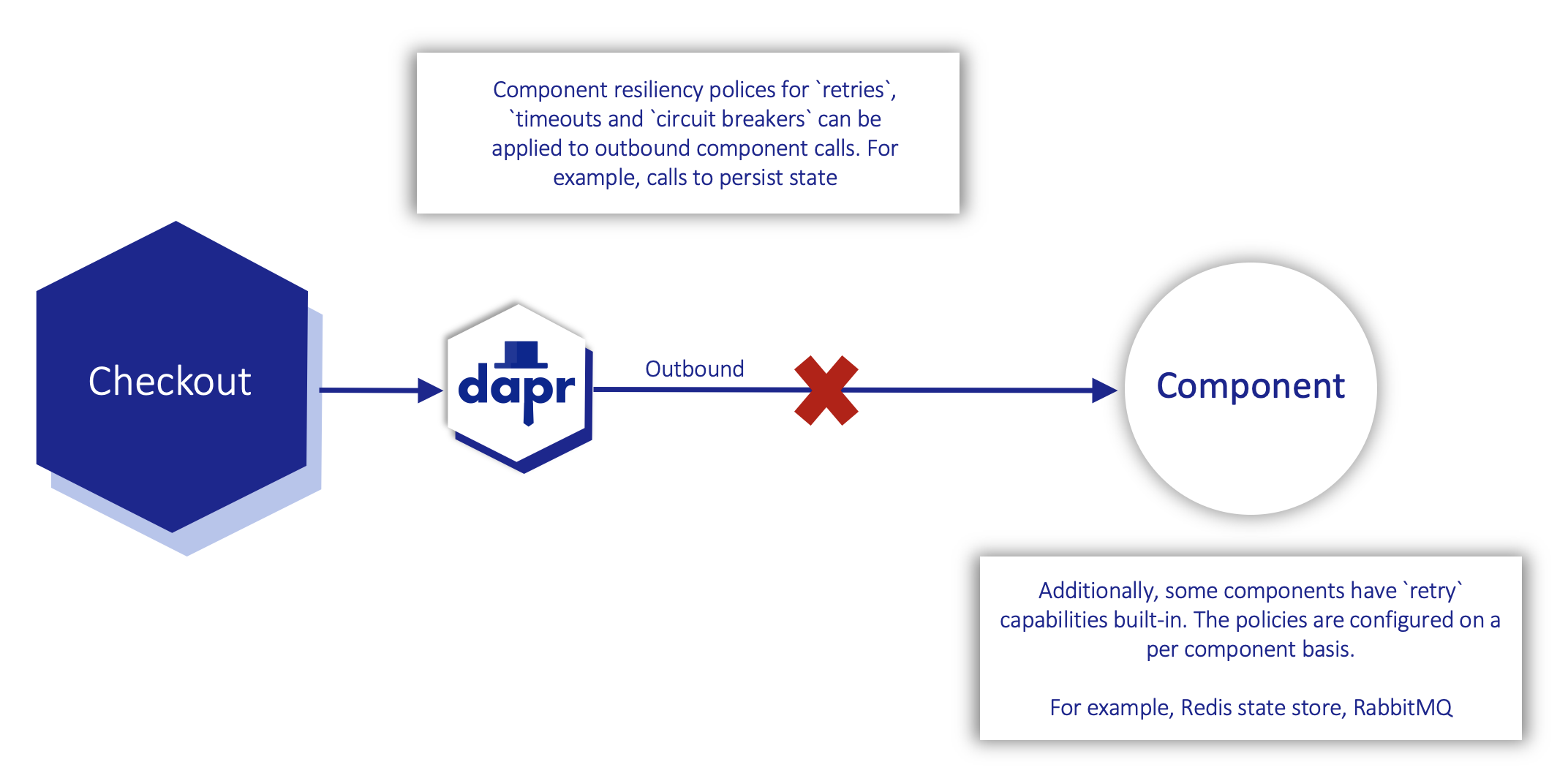
使用 components 目标,您可以将 retry、timeout 和 circuitBreaker 策略应用于组件操作。
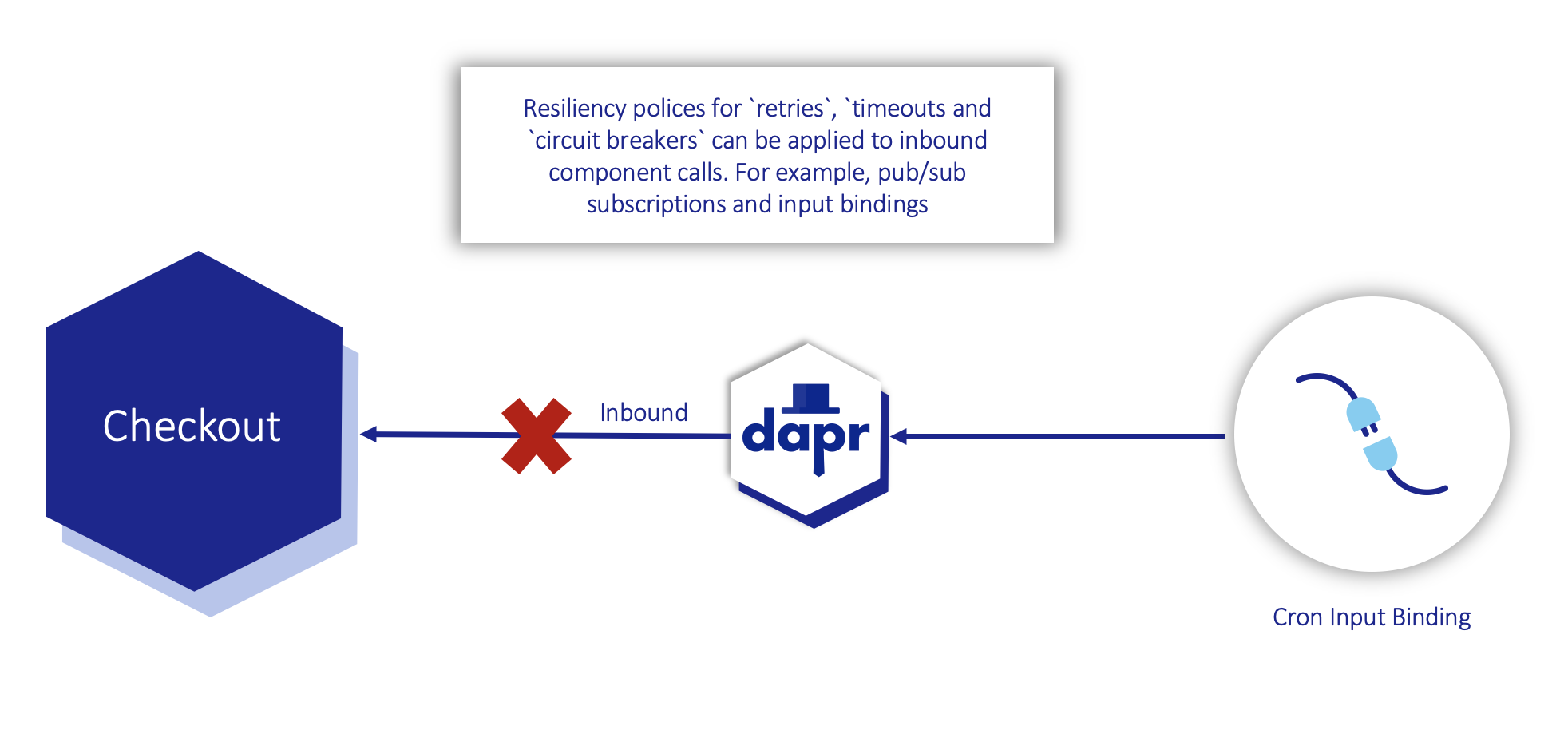
策略可以应用于 outbound 操作(对 Dapr 边车的调用)和/或 inbound(边车调用您的应用)。
出站
outbound 操作是从边车到组件的调用,例如:
- 持久化或检索状态。
- 在发布订阅组件上发布消息。
- 调用输出绑定。
某些组件可能具有内置的重试功能,并按组件配置。
spec:
  targets:
    components:
      myStateStore:
        outbound:
          retry: retryForever
          circuitBreaker: simpleCB
入站
inbound 操作是从边车到您应用的调用,例如:
- 发布订阅订阅在传递消息时。
- 输入绑定。
某些组件可能具有内置的重试功能,并按组件配置。
spec:
  targets:
    components:
      myInputBinding:
        inbound:
          timeout: general
          retry: general
          circuitBreaker: general
发布订阅
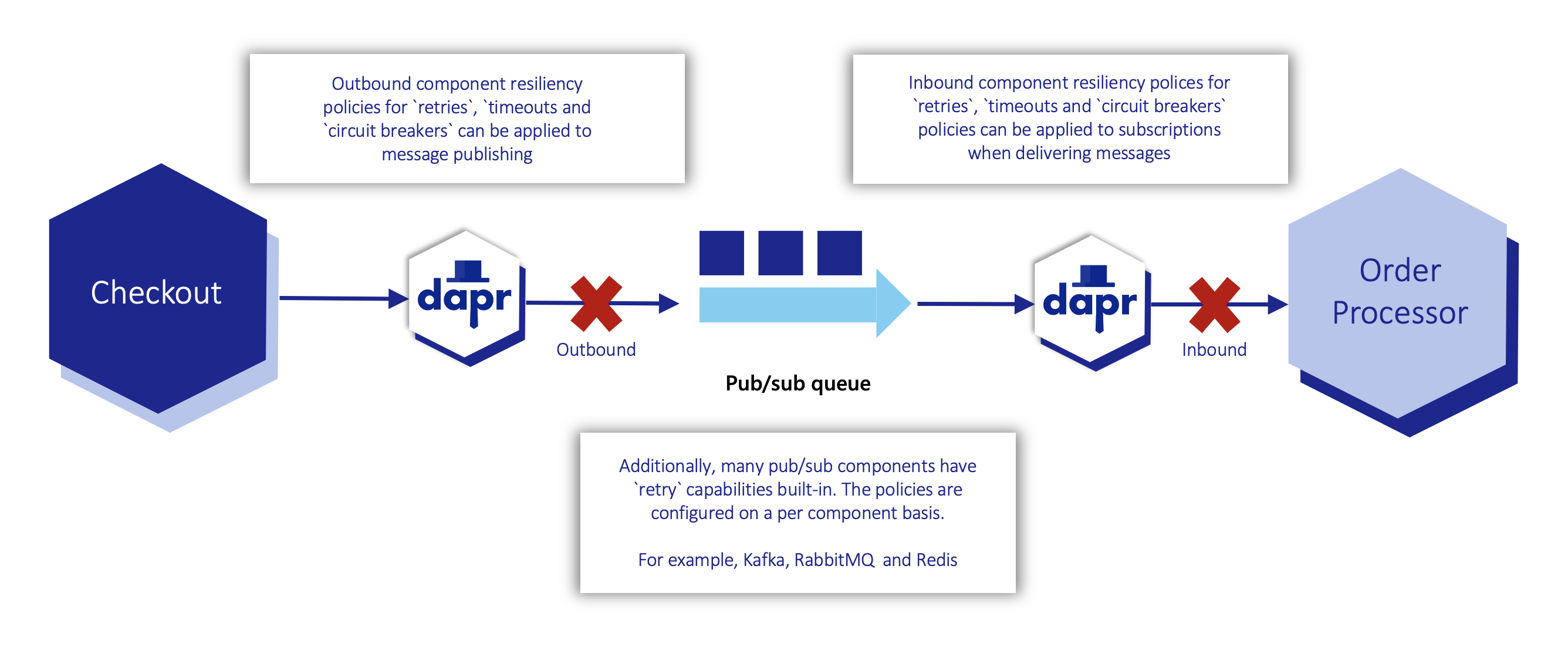
在发布订阅 target/component 中,您可以同时指定 inbound 和 outbound 操作。
spec:
  targets:
    components:
      myPubsub:
        outbound:
          retry: pubsubRetry
          circuitBreaker: pubsubCB
        inbound: # inbound 仅适用于从边车到应用的传递
          timeout: general
          retry: general
          circuitBreaker: general
Actor
使用 actors 目标,您可以将 retry、timeout 和 circuitBreaker 策略应用于 actor 操作。
当为 actors 目标使用 circuitBreaker 策略时,您可以使用 circuitBreakerScope 指定熔断状态应如何确定范围:
id:单个 actor IDtype:给定 actor 类型的所有 actorboth:以上两者
您还可以使用 circuitBreakerCacheSize 属性为内存中保留的熔断器数量指定缓存大小,提供一个整数值,例如 5000。
示例
spec:
  targets:
    actors:
      myActorType:
        timeout: general
        retry: general
        circuitBreaker: general
        circuitBreakerScope: both
        circuitBreakerCacheSize: 5000
后续步骤
尝试其中一个弹性快速入门: