Introduction
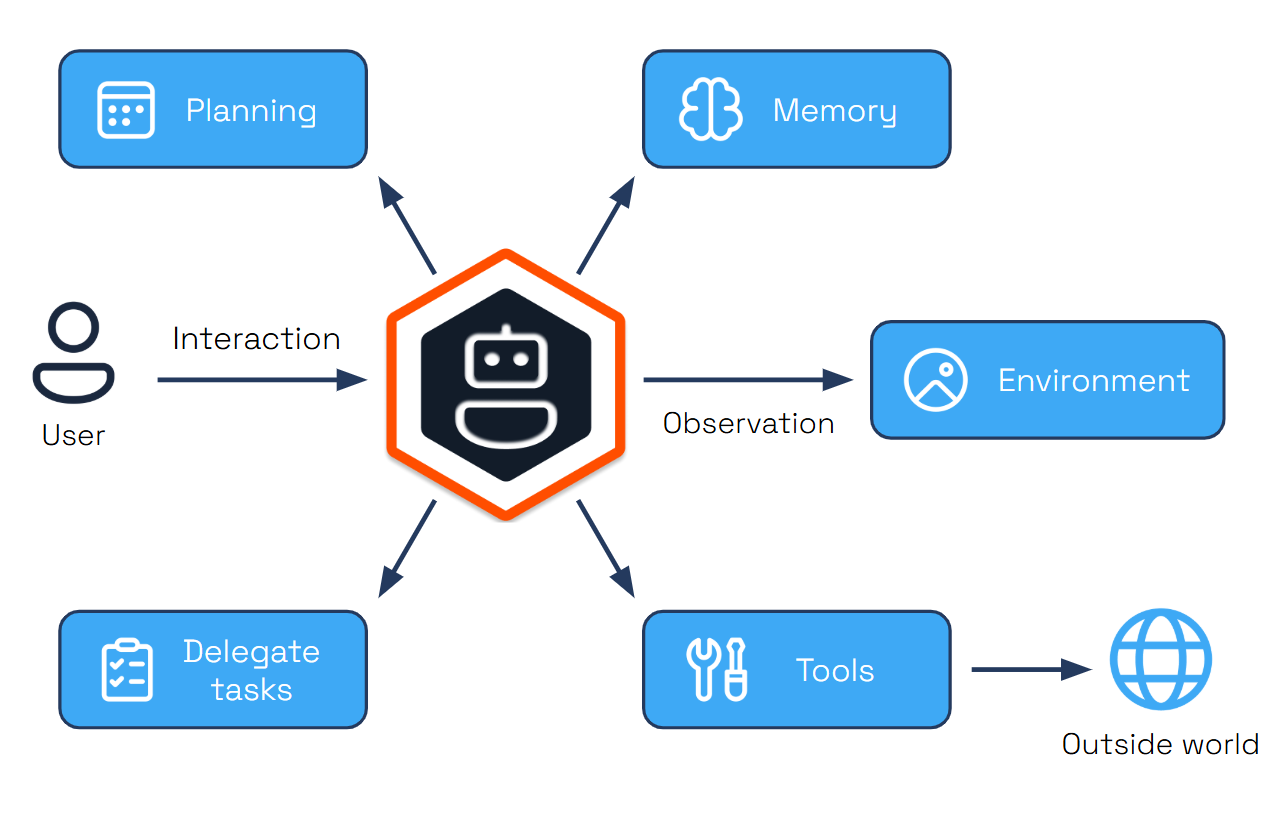
Dapr Agents is a developer framework for building durable and resilient AI agent systems powered by Large Language Models (LLMs). Built on the battle-tested Dapr project, it enables developers to create autonomous systems that have identity, reason through problems, make dynamic decisions, and collaborate seamlessly. It includes built-in observability and stateful workflow execution to ensure agentic workflows complete successfully, regardless of complexity. Whether you’re developing single-agent applications or complex multi-agent workflows, Dapr Agents provides the infrastructure for intelligent, adaptive systems that scale across environments.
Core Capabilities
- Agent Identity: With Dapr Agents, each agent is assigned a unique cryptographic identity that is used to authenticate agent interactions and enforce authorization across services and infrastructure.
- Durable Execution: Agents created with Dapr Agents are backed by Dapr’s workflow engine, which persists every agent interaction with LLMs and tools into a durable state store that can recover and continue execution even after the agent restarts.
- Resilience: Dapr Agents can recover from transient failures with automatic retry policies, timeouts, and circuit breakers, and can also apply durable retries backed by workflow state to recover from longer-lasting failures.
- Scale and Efficiency: Run thousands of agents efficiently on a single core. Dapr distributes single and multi-agent apps transparently across fleets of machines and handles their lifecycle.
- Data-Driven Agents: Directly integrate with databases, documents, and unstructured data by connecting to dozens of different data sources.
- Multi-Agent Systems: Secure and observable by default, enabling collaboration between agents.
- Kubernetes-Native: Easily deploy and manage agents in Kubernetes environments.
- Platform-Ready: Access scopes and declarative resources enable platform teams to integrate Dapr Agents into their systems.
- Vendor-Neutral & Open Source: Avoid vendor lock-in and gain flexibility across cloud and on-premises deployments.
Key Features
Dapr Agents provides specialized modules designed for creating intelligent, autonomous systems. Each module is designed to work independently, allowing you to use any combination that fits your application needs.
| Feature | Description |
|---|---|
| LLM Integration | It abstracts the LLM inference API for chat completion using the Dapr Conversation API, enabling you to swap LLM providers without changing high-level agent code, and includes native clients for embeddings, audio, and other specialized integrations. |
| Structured Outputs | Leverage capabilities like OpenAI’s Function Calling to generate predictable, reliable results following JSON Schema and OpenAPI standards for tool integration. |
| Tool Selection | Dynamic tool selection based on requirements, best action, and execution through Function Calling capabilities. |
| MCP Support | Built-in support for Model Context Protocol enabling agents to dynamically discover and invoke external tools through standardized interfaces. |
| Agents as Tools | Invoke other Dapr Agents—or agents from other frameworks like OpenAI Agents, LangGraph, and CrewAI—as tools within a DurableAgent’s reasoning loop for composable multi-agent systems. |
| Memory Management | Retain context across interactions with options from simple in-memory lists to vector databases (Chroma, PostgreSQL, Redis), integrating with Dapr state stores for scalable, persistent memory. |
| Durable Agents | Workflow-backed agents that provide fault-tolerant execution with persistent state management and automatic retry mechanisms for long-running processes. |
| Agent Runner | Expose agents over HTTP or subscribe to a PubSub for long-running tasks, enabling API access to agents without requiring a user interface or human intervention. |
| Event-Driven Communication | Enable agent collaboration through Pub/Sub messaging for event-driven communication, task distribution, and real-time coordination in distributed systems. |
| Agent Orchestration | Deterministic agent orchestration using Dapr Workflows with higher-level tasks that interact with LLMs for complex multi-step processes. |
Agentic Patterns
Dapr Agents enables a comprehensive set of patterns that represent different approaches to building intelligent systems.
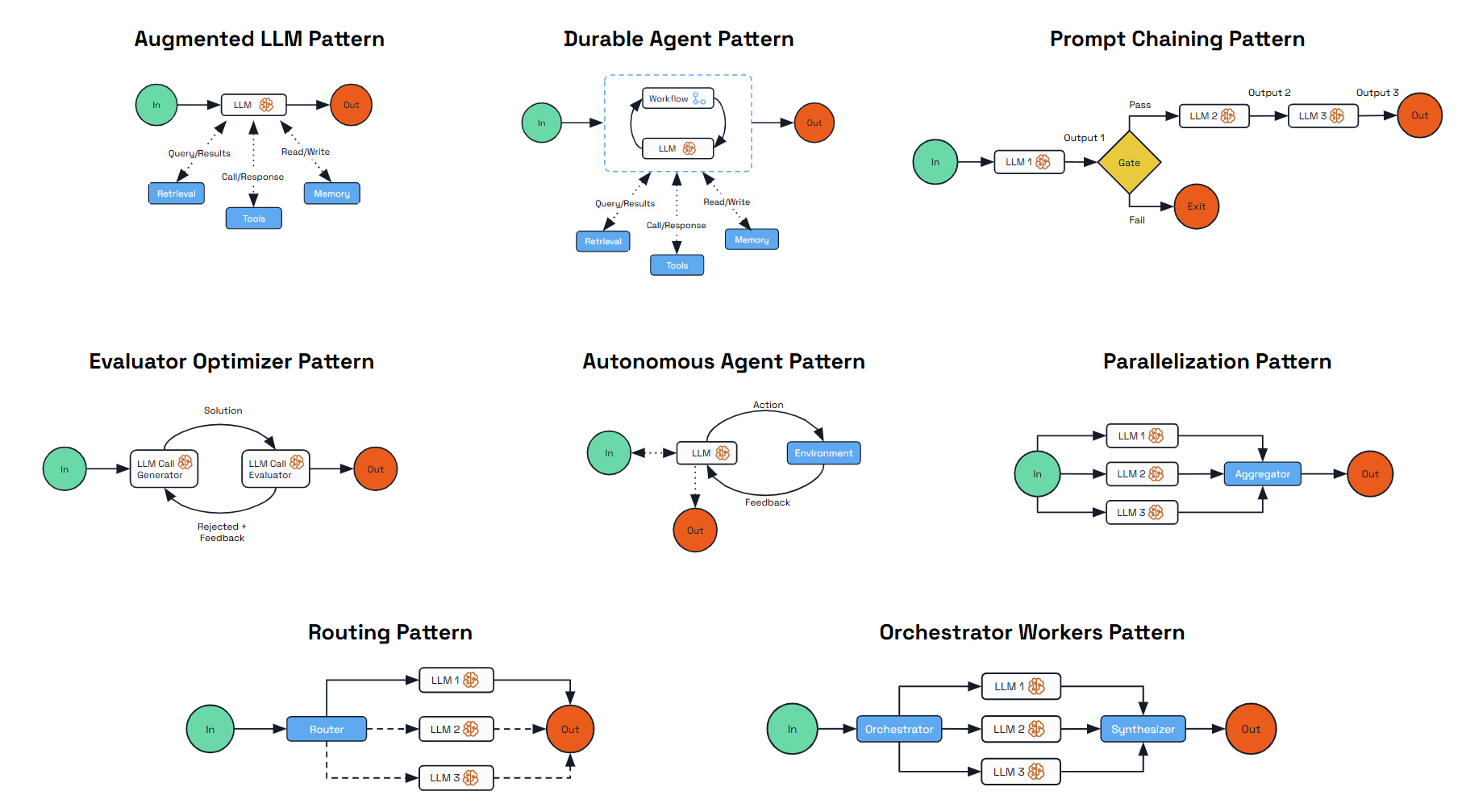
These patterns range from deterministic, workflow-driven designs to fully autonomous agents capable of dynamic planning and execution; each addresses different use cases and balances predictability against autonomy.
| Pattern | Description |
|---|---|
| Augmented LLM | Enhances a language model with external capabilities like memory and tools, providing a foundation for AI-driven applications. |
| Durable Agent | Extends the Augmented LLM by adding durability and persistence to agent interactions using Dapr’s state stores. |
| Prompt Chaining | Decomposes complex tasks into a sequence of steps where each LLM call processes the output of the previous one. |
| Evaluator-Optimizer | Implements a dual-LLM process where one model generates responses while another provides evaluation and feedback in an iterative loop. |
| Parallelization | Processes multiple dimensions of a problem simultaneously with outputs aggregated programmatically for improved efficiency. |
| Routing | Classifies inputs and directs them to specialized follow-up tasks, enabling separation of concerns and expert specialization. |
| Orchestrator-Workers | Features a central orchestrator LLM that dynamically breaks down tasks, delegates them to worker LLMs, and synthesizes results. |
Developer Experience
Dapr Agents is a Python framework built on top of the Python Dapr SDK, providing a comprehensive development experience for building agentic systems.
Getting Started
Get started with Dapr Agents by following the instructions on the Getting Started page.
Framework integrations
Dapr Agents integrates with popular Python frameworks and tools. For detailed integration guides and examples, see the integrations page.
Operational support
Dapr Agents inherits Dapr’s enterprise-grade operational capabilities, providing comprehensive support for durable and reliable deployments of agentic systems.
Built-in Operational Features
- Observability - Distributed tracing, metrics collection, and logging for agent interactions and workflow execution
- Security - mTLS encryption, access control, and secrets management for secure agent communication
- Resiliency - Automatic retries, circuit breakers, and timeout policies for fault-tolerant agent operations
- Infrastructure Abstraction - Dapr components abstract LLM providers, memory stores, storage and messaging backends, enabling seamless transitions between different environments
These capabilities enable teams to monitor agent performance, secure multi-agent communications, and ensure reliable execution of complex agentic workflows.
Contributing
Whether you’re interested in enhancing the framework, adding new integrations, or improving documentation, we welcome contributions from the community.
For development setup and guidelines, see our Contributor Guide.